
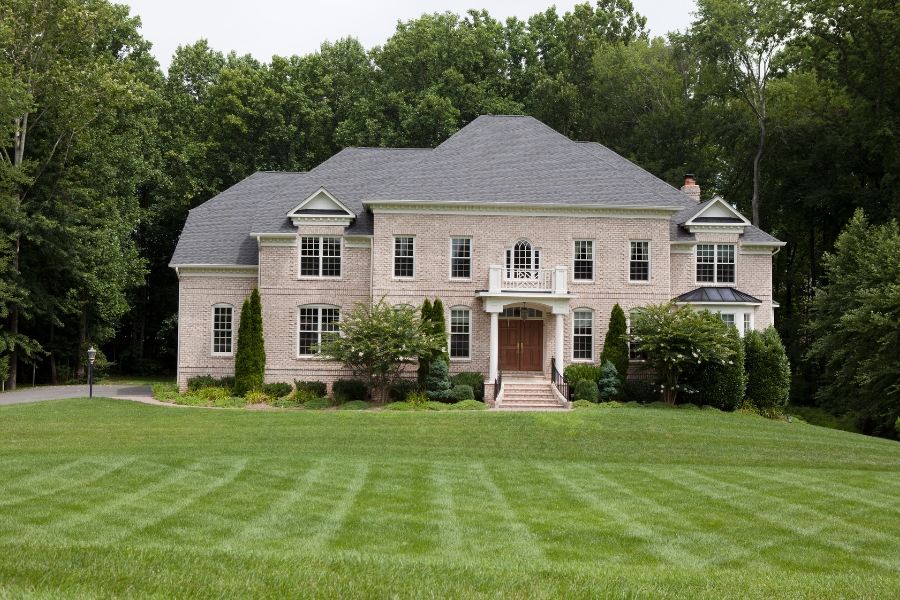
Buying your first home can feel difficult when you are trying to understand credit requirements, down payments, income, mortgage insurance, loan limits, and other financing rules. An FHA loan can be an option worth considering for eligible buyers who may not have a large down payment or a strong conventional mortgage profile.
The Federal Housing Administration does not lend money directly to home buyers. Instead, FHA insures mortgages made by approved lenders, which can make it possible for lenders to offer financing to borrowers who meet FHA requirements. HUD says FHA financing can offer down payments as low as 3.5% and is available for eligible one- to four-unit properties.
But an FHA loan is not automatically available to every first-time buyer. You still need to meet credit, income, debt, property, occupancy, and other requirements.
Understanding these requirements before you start shopping can help you determine whether an FHA mortgage may fit your home-buying plans.
What Is an FHA Loan?
An FHA loan is a mortgage insured by the Federal Housing Administration, which is part of the U.S. Department of Housing and Urban Development.
Unlike a conventional mortgage, which is not federally insured in the same way, an FHA-insured mortgage provides protection to the lender if the borrower defaults, subject to FHA rules.
One reason FHA financing attracts first-time buyers is its relatively low down-payment requirement. HUD states that the down payment can be as low as 3.5% for eligible borrowers.
FHA financing can be used for eligible:
- Single-family homes
- Townhomes
- Condominiums
- Certain manufactured homes
- Two-unit properties
- Three-unit properties
- Four-unit properties
The property must satisfy FHA requirements, and the borrower generally needs to occupy the property as a principal residence.
Do You Have to Be a First-Time Home Buyer for an FHA Loan?
No.
Despite being popular with first-time buyers, FHA loans are not exclusively for people purchasing their first home.
You may qualify for FHA financing even if you have owned a home previously, provided you meet the applicable FHA and lender requirements.
However, first-time buyers may find FHA financing particularly useful because of its relatively low down-payment requirement and flexible credit guidelines compared with some conventional options.
The important point is that being a first-time buyer alone does not qualify you for an FHA loan.
You still need to meet the program’s requirements.
What Are the FHA Loan Requirements?
FHA borrowers generally need to satisfy several areas of qualification, including:
- Credit requirements
- Down-payment requirements
- Income and employment requirements
- Debt-to-income considerations
- Mortgage insurance requirements
- Property requirements
- Owner-occupancy requirements
- FHA loan limits
- Lender-specific requirements
The lender will review your financial information and determine whether your application meets FHA guidelines as well as the lender’s own underwriting standards.
Let’s look at each area in more detail.
FHA Credit Score Requirements
Credit score is one of the most common questions from first-time buyers.
For FHA financing, borrowers with a credit score of 580 or higher can generally qualify for maximum financing, which corresponds to a minimum required investment of 3.5%.
Borrowers with scores between 500 and 579 can generally qualify only with a minimum required investment of 10%. FHA policy limits the maximum loan-to-value ratio to 90% in that range.
However, this does not mean that every lender will approve a borrower at the FHA minimum.
A lender may have additional credit requirements.
Your credit report also matters beyond the score itself. Lenders may review your payment history, outstanding debts, collections, bankruptcies, and other information when evaluating your application.
Example
Suppose you are buying a $400,000 home.
With a 3.5% down payment:
$400,000 × 3.5% = $14,000
If you fall into the FHA credit-score range that requires a 10% minimum investment:
$400,000 × 10% = $40,000
This demonstrates why your credit profile can have a direct effect on the amount of money you may need upfront.
How Much Down Payment Is Required for an FHA Loan?
For eligible borrowers who qualify for maximum FHA financing, the minimum required investment can be 3.5% of the purchase price or adjusted value, subject to FHA rules. HUD describes FHA’s basic 203(b) mortgage as offering approximately 96.5% financing.
Here is what 3.5% looks like at different purchase prices:
| Home Price | 3.5% Down Payment |
| $300,000 | $10,500 |
| $400,000 | $14,000 |
| $500,000 | $17,500 |
| $600,000 | $21,000 |
| $700,000 | $24,500 |
| $800,000 | $28,000 |
These figures represent only the down payment.
You may also need money for closing costs, prepaid expenses, inspections, moving expenses, and reserves.
Can Someone Else Help With the FHA Down Payment?
Potentially, yes.
HUD notes that the FHA minimum required investment may come from acceptable sources such as the borrower’s own funds, gifts, certain second mortgages, and grants through qualifying down-payment assistance programs.
However, not every source of money is automatically acceptable.
If you plan to use gift funds or assistance, tell your lender before using the money so they can explain the documentation and eligibility requirements.
Keep records showing where the funds came from and follow the lender’s instructions carefully.
FHA Income and Employment Requirements
FHA does not simply approve a borrower based on having a particular annual salary.
Instead, the lender evaluates whether your income is sufficient, stable, and adequately documented to support the mortgage and your other obligations.
Your lender may request documentation such as:
- Recent pay stubs
- W-2 forms
- Tax returns
- Bank statements
- Employment information
- Proof of additional income
- Documentation for self-employment income
The requirements can vary depending on how you earn money.
For example, a salaried employee may have a simpler documentation process than someone who is self-employed or has multiple sources of income.
If your income has recently changed, discuss the situation with your lender before assuming you qualify.
Debt-to-Income Ratio and FHA Loans
Your existing debt is another important part of the mortgage application.
A lender may calculate your debt-to-income ratio, or DTI, by comparing your monthly debt obligations with your gross monthly income.
Debt can include obligations such as:
- Auto loans
- Student loans
- Credit card payments
- Personal loans
- Other installment debts
- The proposed housing payment
FHA underwriting can allow higher DTI ratios in certain circumstances, but the exact amount depends on factors such as credit, assets, compensating factors, and automated underwriting results.
This is why there is no simple rule saying every FHA borrower can have a particular maximum DTI.
A lender needs to review your complete financial profile.
FHA Mortgage Insurance Requirements
Mortgage insurance is an important difference between FHA and many other mortgage options.
FHA-insured loans generally involve both an upfront mortgage insurance premium and an annual mortgage insurance premium, which is typically paid through monthly mortgage payments.
HUD explains that the upfront premium can be financed into the mortgage, while the annual premium is collected with monthly payments.
This means a lower down payment does not necessarily mean a lower overall cost.
When comparing FHA financing with conventional financing, look beyond the down payment.
Compare:
- Interest rate
- Monthly principal and interest
- Mortgage insurance
- Upfront mortgage insurance
- Closing costs
- Loan term
- Total borrowing costs
A lender can provide a more accurate comparison based on your circumstances.
FHA Property Requirements
The borrower is not the only part of an FHA application that needs to qualify.
The property must also meet applicable FHA requirements.
HUD states that eligible FHA properties can include one- to four-unit structures, but the property must satisfy FHA standards.
The appraisal process is important because the FHA appraisal evaluates the property for compliance with applicable requirements as well as value considerations.
Potential issues involving safety, structural condition, or habitability can affect the transaction.
This does not mean every older home is automatically ineligible.
However, buyers should understand that an FHA-financed property may need to satisfy requirements that affect the appraisal and loan process.
Does the Home Have to Be Your Primary Residence?
Generally, yes.
FHA’s basic 203(b) program is intended for a person’s principal residence.
This means an FHA loan generally is not designed for someone who wants to purchase a property purely as an investment.
The occupancy requirement is particularly important when considering multi-unit properties.
An eligible buyer may be able to purchase a two-, three-, or four-unit property under FHA financing, but the borrower generally needs to occupy the property as their principal residence and satisfy applicable requirements.
FHA Loan Limits
Another important requirement is the maximum FHA mortgage amount available for the property location and number of units.
FHA loan limits vary by county or metropolitan area and are updated annually.
For 2026, HUD established a nationwide one-unit FHA loan limit floor of $541,287 and a high-cost ceiling of $1,249,125. Higher limits apply to two-, three-, and four-unit properties.
This is particularly important for buyers in higher-cost markets such as Northern Virginia.
The applicable limit depends on the property’s county or metropolitan area and the number of units.
Therefore, do not assume the nationwide floor or ceiling is the limit that applies to your specific home.
Check the FHA loan limit for the exact property location before building your purchase budget.
FHA Loans in Northern Virginia
If you’re considering an FHA loan in Northern Virginia, the local FHA loan limit is especially important because home prices can be considerably higher than in many other parts of Virginia.
A buyer may find a property that fits their monthly budget but exceeds the applicable FHA mortgage limit.
In that situation, the buyer may need to:
- Increase the down payment
- Consider another financing option
- Look at a lower-priced property
- Compare different loan programs
The applicable FHA limit should be checked for the specific county or city where you plan to buy.
HUD publishes annual FHA limits by location, and the limits can change from one year to another.
FHA Closing Costs
The 3.5% down payment is not the only upfront expense.
Buyers should also budget for closing costs and prepaid expenses.
These can include:
- Lender fees
- Appraisal
- Title services
- Recording fees
- Prepaid interest
- Property taxes
- Homeowners insurance
- Initial escrow deposits
- Other settlement expenses
The exact amount varies by transaction.
This is why someone considering an FHA mortgage should calculate their total cash needed, rather than assuming they only need 3.5% of the purchase price.
Can FHA Buyers Get Help With Closing Costs?
Potentially.
FHA borrowers may use certain acceptable sources of funds and assistance, subject to FHA and lender requirements.
There may also be state and local homebuyer assistance programs that can help eligible buyers with down payment or closing expenses.
However, program eligibility can depend on income, location, purchase price, household circumstances, loan type, and other factors.
If you are buying in Virginia, ask your lender or a qualified housing professional about currently available programs rather than relying on outdated information found online.
FHA Appraisal vs. Home Inspection
An FHA appraisal and a home inspection are not the same thing.
The appraisal is part of the lender’s process for determining the property’s value and assessing whether it meets applicable FHA property requirements.
A home inspection is a separate evaluation that can help the buyer understand the condition of the home.
Even when an FHA appraisal is completed, a buyer may still benefit from getting an independent home inspection.
An inspection can uncover issues that are important to you as the homeowner, even if they do not prevent the property from meeting FHA requirements.
What Documents Do You Need for an FHA Loan?
Your lender will tell you exactly what documentation is required, but you may need:
- Government-issued identification
- Recent pay stubs
- W-2 forms
- Tax returns when applicable
- Bank statements
- Employment history
- Information about current debts
- Credit information
- Documentation of the down payment
- Gift-fund documentation, if applicable
- Information about the property
Self-employed borrowers or buyers with unusual income situations may need additional documentation.
The faster you can provide accurate documents, the easier it can be for your lender to process your application.
How to Apply for an FHA Loan
The process generally follows these steps.
1. Review Your Budget
Determine how much you can comfortably spend each month.
Don’t base your budget only on the maximum amount a lender says you qualify for.
2. Check Your Credit
Review your credit profile and address inaccurate information or financial issues where appropriate.
3. Save for the Purchase
Plan for the down payment, closing costs, moving expenses, inspections, and emergency savings.
4. Compare FHA-Approved Lenders
FHA insurance does not mean every lender offers identical rates, fees, or underwriting requirements.
Compare lenders before choosing one.
5. Get Pre-Approved
A pre-approval can help you understand your purchasing range before you start making offers.
6. Find an Eligible Property
Once you have a target budget, work with your real estate agent to identify suitable homes.
7. Make an Offer
Your agent can help you evaluate the property, market conditions, and offer terms.
8. Complete the Mortgage Process
After an accepted offer, your lender will continue with underwriting, appraisal, documentation, and other required steps.
9. Close on the Home
Once all requirements are satisfied, you can complete the closing process and become the homeowner.
FHA Loan Pros and Cons for First-Time Buyers
An FHA loan can be useful, but it isn’t automatically the best choice.
Potential Advantages
- Down payment can be as low as 3.5% for eligible borrowers
- Credit requirements can be more flexible than some conventional options
- Available for eligible one- to four-unit properties
- Some acceptable sources can help satisfy the minimum required investment
- May be useful for buyers who have limited savings
Potential Disadvantages
- Mortgage insurance adds to the cost
- Property requirements can affect the transaction
- FHA loan limits vary by location
- A low down payment means borrowing more
- Individual lenders may have stricter requirements
- FHA may not always be the least expensive option for borrowers with strong credit
The right choice depends on your financial circumstances.
FHA vs. Conventional Loan: Which Is Better?
There is no universal winner.
An FHA loan may make sense for a buyer who wants a lower down payment and has a credit profile that fits FHA financing.
A conventional loan may be more attractive for a buyer with stronger credit, a larger down payment, or a desire to reduce certain mortgage insurance costs.
When comparing the two, look at the complete financial picture.
Ask your lender to compare:
FHA monthly payment
vs.
Conventional monthly payment
Then compare:
- Upfront costs
- Mortgage insurance
- Interest rate
- Closing costs
- Cash required
- Total projected loan costs
Choosing a mortgage based only on the smallest down payment can result in a more expensive loan over time.
What Should First-Time Buyers Do Before Choosing FHA?
Before committing to an FHA mortgage, consider these questions:
Can I comfortably afford the monthly payment?
How much cash will I have left after closing?
Would conventional financing cost less based on my credit profile?
Does the property fall within the FHA loan limit?
Will the property satisfy FHA requirements?
Am I eligible for any down-payment assistance?
How much will mortgage insurance add to my monthly cost?
Getting answers to these questions can help you make a more informed decision.
Final Thoughts
FHA loans can be a useful financing option for first-time buyers who want a lower down payment or may not fit the requirements of some conventional mortgages.
For eligible borrowers, FHA financing can allow a down payment as low as 3.5%, while borrowers with credit scores between 500 and 579 generally need a 10% minimum required investment under FHA guidelines.
But the down payment is only one part of the equation.
You also need to consider credit, income, debt, mortgage insurance, closing costs, property requirements, occupancy rules, and the FHA loan limit for the area where you want to buy.
If you’re a first-time buyer considering an FHA loan in Virginia or Northern Virginia, contact us to discuss your home-buying plans. We can help you understand the local market, find properties that fit your goals, and guide you through the home-buying process from your initial search through closing.
Frequently Asked Questions
1. What is the minimum down payment for an FHA loan?
Eligible borrowers can generally qualify for maximum FHA financing with a minimum required investment of 3.5%. Borrowers with credit scores between 500 and 579 generally need a 10% minimum required investment.
2. What credit score do I need for an FHA loan?
FHA guidelines generally allow maximum financing for borrowers with a credit score of 580 or higher. Borrowers with scores between 500 and 579 may qualify with a larger 10% minimum required investment. Individual lenders can have additional requirements.
3. Do I have to be a first-time buyer to get an FHA loan?
No. FHA loans are not limited to first-time buyers. However, their lower down-payment and credit flexibility can make them attractive to some first-time buyers.
4. Can I use an FHA loan to buy a condo or townhouse?
Potentially, yes. FHA financing can be used for eligible condominiums and other qualifying property types. The specific property must meet applicable FHA requirements.
5. What is the FHA loan limit in 2026?
For 2026, the nationwide FHA loan limit floor for a one-unit property is $541,287, while the high-cost ceiling is $1,249,125. The actual limit depends on the property’s location and number of units.