
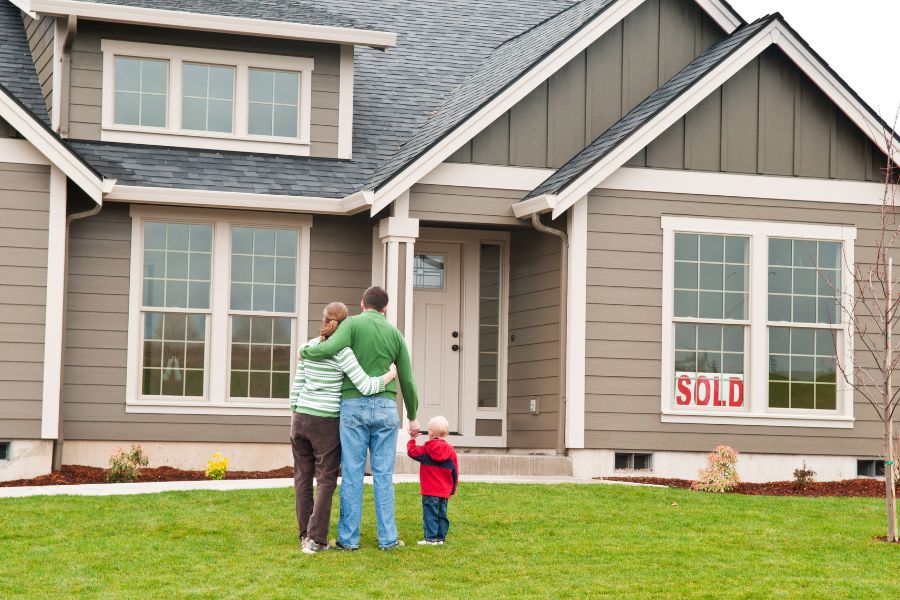
Buying your first home is exciting, but one of the biggest questions is usually: How much money do first-time home buyers need?
The answer is not as simple as saving 20% of the purchase price. Depending on the type of mortgage, your credit profile, the home price, closing costs, and available assistance programs, you may be able to buy a home with a much smaller down payment.
However, having enough for the down payment is only one part of the equation. You also need to plan for closing costs, inspections, moving expenses, insurance, taxes, and an emergency fund.
The Consumer Financial Protection Bureau recommends looking beyond the down payment and accounting for closing costs, moving expenses, repairs, furnishings, and an emergency cushion when deciding how much cash you can safely use for a home purchase.
How Much Money Do You Need to Buy Your First Home?
There is no single savings amount that works for every first-time buyer. Your target should be based on the price of the home and the mortgage program you qualify for.
For example, if you purchase a $400,000 home:
| Expense | Example Amount |
| 3% down payment | $12,000 |
| 5% down payment | $20,000 |
| 10% down payment | $40,000 |
| 20% down payment | $80,000 |
| Estimated closing costs at 2% | $8,000 |
| Estimated closing costs at 5% | $20,000 |
These are examples rather than quotes. Your actual costs can vary based on the loan, lender, property, location, taxes, insurance, and other factors.
The important point is that your total cash needed is more than your down payment.
What Costs Should First-Time Buyers Budget For?
Before deciding how much you need to save, break the purchase into several categories.
1. Down Payment
The down payment is the portion of the home’s purchase price you pay upfront rather than borrowing through your mortgage.
You may have heard that you need 20% down to buy a home. That is not necessarily true.
Some conventional mortgage programs can allow down payments as low as 3%, while FHA loans can require as little as 3.5% for eligible borrowers. Certain buyers may also qualify for VA, USDA, or other programs with different down-payment requirements.
A smaller down payment can make homeownership possible sooner, but it can also increase your monthly payment and may result in mortgage insurance or other costs.
A larger down payment can reduce the amount you borrow and may lower your overall borrowing costs. However, putting every dollar of savings into the house is not always the best decision.
2. Closing Costs
Closing costs are another major expense that first-time buyers sometimes overlook.
The CFPB says closing costs typically range from 2% to 5% of the purchase price, excluding the down payment, although the actual amount depends on factors such as the lender, loan type, property, location, and transaction.
Closing costs can include expenses such as:
- Loan origination charges
- Appraisal fees
- Title-related costs
- Government taxes and recording fees
- Homeowners insurance
- Prepaid interest
- Property taxes
- Initial escrow deposits
- Other settlement services
Your Loan Estimate and Closing Disclosure provide important details about these expenses.
For a $400,000 home, 2% to 5% would represent approximately $8,000 to $20,000 in closing costs.
That means a buyer making a 5% down payment could potentially need around $28,000 to $40,000 for the down payment and closing costs before considering other savings needs.
3. Home Inspection and Other Upfront Expenses
A home inspection is another expense worth planning for.
An inspection can help identify potential problems with the property before you complete the purchase. Depending on the property and location, you may also choose or need additional inspections, such as pest, structural, sewer, radon, or other specialized inspections.
These costs are separate from your down payment.
You should also budget for expenses that can appear immediately after closing, including:
- Moving costs
- Utility deposits or setup fees
- Furniture
- Appliances
- Locks and security improvements
- Immediate repairs
- Maintenance supplies
- Window treatments or other basic household items
The CFPB specifically recommends keeping money available for moving, repairs, furnishings, and other early homeownership expenses rather than putting every available dollar toward the down payment.
4. Emergency Savings
One of the most important parts of your home-buying budget is the money you do not spend on the house.
After closing, you should still have an emergency cushion for unexpected expenses.
A broken water heater, appliance failure, roof issue, medical expense, or temporary income disruption can become much more stressful if your savings account is nearly empty.
The CFPB recommends considering an emergency cushion of roughly three to six months of expenses when determining how much cash is actually available for closing.
This is why having $50,000 saved does not necessarily mean you should spend all $50,000 on your home purchase.
Do First-Time Home Buyers Need 20% Down?
No. A 20% down payment is not a universal requirement.
The amount you need depends on the mortgage program and lender requirements. Some conventional options may allow 3% down, and FHA financing can require as little as 3.5% for eligible borrowers. Other programs may have different requirements.
However, choosing a smaller down payment comes with trade-offs.
For example, when you put less than 20% down, you will likely have mortgage insurance on many conventional loans. That can increase your monthly housing cost.
So instead of asking, “How can I put down as little as possible?” consider asking:
“What down payment gives me a comfortable monthly payment while allowing me to keep enough savings?”
That is a much more useful question.
How Much Should You Save for a $300,000 Home?
Consider a hypothetical $300,000 purchase.
A 3% down payment would be $9,000, while 5% would be $15,000. A 10% down payment would be $30,000, and 20% would be $60,000.
If closing costs were approximately 2% to 5%, that could add another $6,000 to $15,000.
So a buyer using a 5% down payment could be looking at approximately:
$15,000 down payment + $6,000–$15,000 closing costs = $21,000–$30,000
And that is before accounting for moving expenses, inspections, repairs, furnishings, and emergency savings.
The actual amount will depend on the specific transaction.
How Much Should You Save for a $500,000 Home?
The same calculation can be applied to a $500,000 home.
A 5% down payment would be $25,000.
If closing costs were 2% to 5%, that could add approximately $10,000 to $25,000.
That puts the estimated down payment plus closing costs at approximately $35,000 to $50,000.
Again, this does not mean you should have exactly $35,000 or $50,000 and immediately buy.
You should also consider whether you have enough savings left after closing to handle emergencies and normal homeownership expenses.
What About Down Payment Assistance?
Some first-time buyers may qualify for down payment assistance or other home-buying programs.
Programs can vary by state, local government, lender, nonprofit organization, income level, property location, and other eligibility requirements.
Assistance may take different forms, including grants, deferred loans, forgivable loans, or other support.
If you are considering assistance, ask your lender and a qualified housing counselor which programs may apply to your situation. The CFPB also recommends exploring state, local, and nonprofit programs that may offer assistance.
Do not assume that every program advertised online is right for you. Review the eligibility requirements, repayment terms, interest rate, and restrictions before accepting assistance.
How Much Home Can You Actually Afford?
Having enough money for the down payment does not automatically mean you can comfortably afford the home.
Your monthly housing cost can include:
- Mortgage principal
- Mortgage interest
- Property taxes
- Homeowners insurance
- Mortgage insurance, if applicable
- HOA fees
- Maintenance and repairs
The CFPB recommends considering the total monthly home payment, rather than looking only at principal and interest.
For example, you might qualify for a larger mortgage than you feel comfortable paying every month.
That distinction matters.
Being approved for a certain amount is not the same as being financially comfortable with that amount.
Your income, existing debts, savings, lifestyle expenses, future plans, and emergency fund should all be considered before choosing a price range.
A Simple Way to Calculate Your First-Time Buyer Savings Goal
You can create a basic savings target using this formula:
Down payment + closing costs + inspection/moving costs + initial repairs + emergency savings = total target savings
For example:
$20,000 down payment
- $12,000 estimated closing costs
- $3,000 moving and initial expenses
- $2,000 initial repairs/furnishings
- emergency savings
= your approximate cash target
The numbers will be different for every buyer.
The key is to calculate the entire financial picture instead of saving toward the down payment alone.
Should You Wait Until You Have More Money Saved?
Not necessarily.
Waiting can make sense if buying today would leave you with little or no emergency savings. It may also make sense if your credit needs improvement, your monthly debts are too high, or your income is not stable enough for the payment you are considering.
On the other hand, you may not need to wait until you have 20% of the purchase price saved.
The right time to buy depends on your overall financial position, available loan options, expected monthly payment, and personal goals.
Speaking with a lender early can help you understand your financing options without committing to a particular home.
What First-Time Buyers Should Do Before Making an Offer
Before you start seriously shopping, take these steps:
Review Your Savings
Know exactly how much money you have available and how much you need to keep untouched.
Check Your Credit
Your credit profile can affect mortgage options, interest rates, and borrowing costs.
Review Your Debts
Car loans, credit cards, student loans, and other debts can affect how much you can comfortably spend on housing.
Get Pre-Approved
A mortgage pre-approval can help you understand your potential purchasing range and demonstrate that you are a serious buyer.
Estimate Total Monthly Costs
Do not calculate your budget using the mortgage payment alone. Include taxes, insurance, mortgage insurance, HOA fees, and other expected costs.
Keep a Cash Cushion
Do not drain your savings simply to increase your down payment.
Work With an Experienced Realtor
A knowledgeable real estate professional can help you understand the buying process, evaluate homes, structure an offer, negotiate terms, and navigate the transaction from contract to closing.
Final Thoughts
So, how much do first-time home buyers need?
There is no universal dollar amount. Some buyers may be able to purchase with a relatively small down payment, while others may choose to save more to reduce their loan balance and monthly costs.
The bigger goal is to have enough money for the entire purchase, not just the down payment.
Plan for closing costs, inspections, moving expenses, repairs, insurance, taxes, and an emergency cushion. Then look at the monthly payment and make sure it fits comfortably within your budget.
If you’re preparing to buy your first home, contact us to discuss your home-buying goals and get guidance on finding a property that fits your needs and budget. The right preparation can make your first home purchase more manageable and help you move forward with greater confidence.
Frequently Asked Questions
1. How much money should a first-time home buyer have saved?
There is no fixed amount. Your savings should cover the down payment, closing costs, moving expenses, initial repairs, and an emergency fund. Closing costs alone commonly range from about 2% to 5% of the purchase price, excluding the down payment.
2. Can I buy my first home with 5% down?
Yes, depending on the mortgage program and your eligibility. Some conventional loans allow down payments below 5%, while other loan programs have different requirements. Your lender can explain which options you may qualify for.
3. Do I need 20% down to buy a home?
No. A 20% down payment is not required for every mortgage. Some programs allow significantly smaller down payments. However, putting less than 20% down may result in mortgage insurance or other additional costs.
4. What costs are included in closing costs?
Closing costs can include lender charges, appraisal fees, title-related expenses, government taxes and recording fees, prepaid interest, homeowners insurance, property taxes, and initial escrow deposits. The exact costs vary by transaction.
5. Should I use all my savings for a down payment?
Usually, you should avoid using every dollar you have. Homeowners can face unexpected repairs and other expenses soon after moving in. Keeping an emergency fund and money for initial homeownership costs can provide valuable financial flexibility.